

Empty trails, autumn color, and the glacial lagoon to yourself. What April in Cerro Castillo actually looks like, from guides who've done it every season.
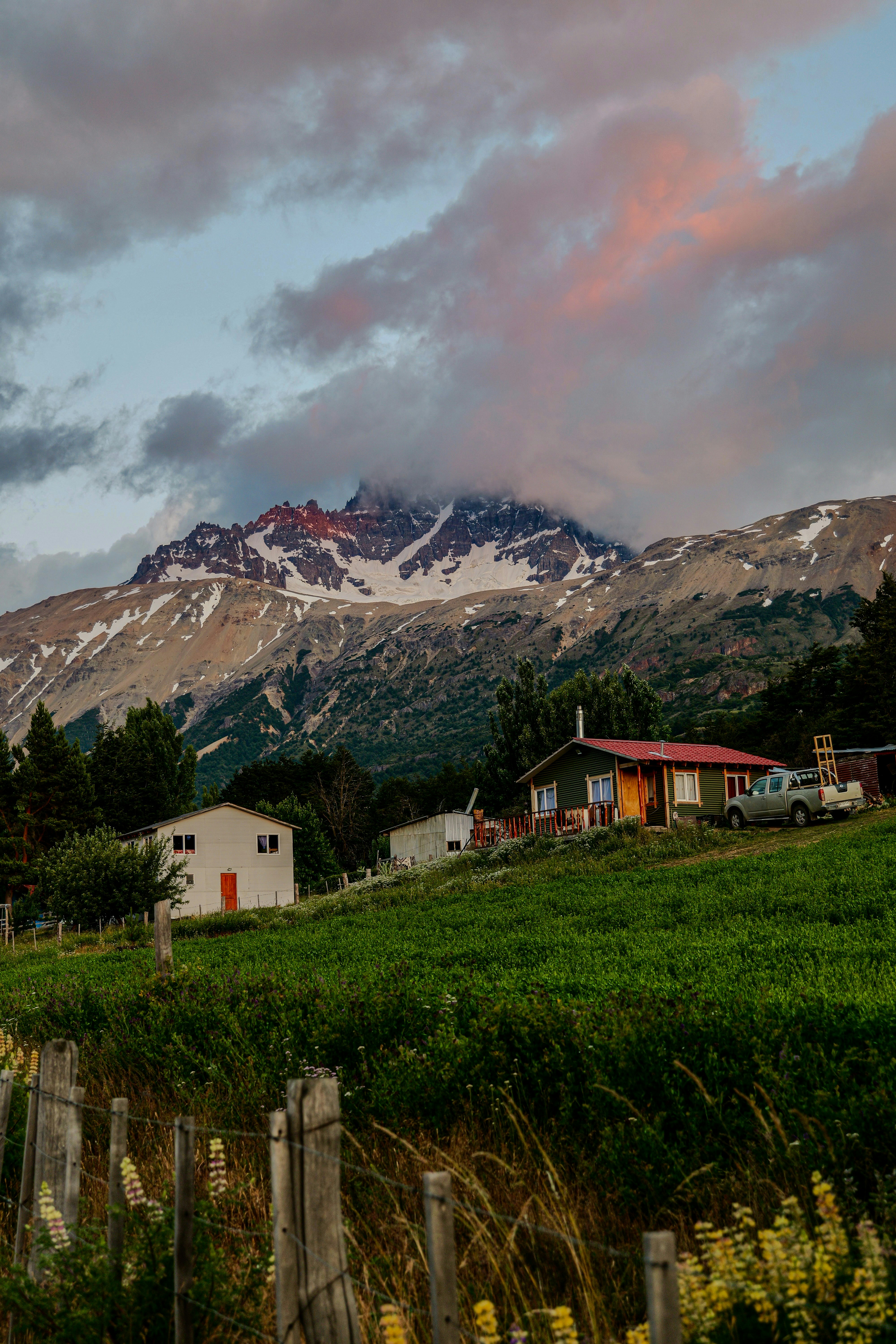
Cerro Castillo
Every year, around the first week of April, something changes in Villa Cerro Castillo.
The summer backpackers are gone. The Carretera Austral gets quieter. The lenga beech trees, which spend December and January in deep green, start turning. First rust. Then amber. Then, on a clear morning after a cold night, full copper-red against the black basalt towers.
Most travelers don't see this. They book January or February because that's what every guide says to do. They share the trail with a hundred other people, wait in line at the ranger station, and fight for campsites at Neozelandés.
Our guides have spent years leading clients through this park in every season. What follows is an honest account of what April in Cerro Castillo actually looks like, the good, the hard parts, and why we think it's one of the most underrated windows to visit Patagonia.
The Crowds Question
Let's start with the thing everyone asks about, because it's the most important difference.
In January, the Las Horquetas Circuit, the full four-day route, sees dozens of groups on the trail simultaneously. CONAF introduced a limit of 40 hikers per day entering from Las Horquetas, which tells you something about how busy the peak has become. Campsites fill early. The lagoon viewpoint, which should feel like a remote corner of the Andes, sometimes has a line.
April is a different experience.
By early April, the peak-season crowds have almost entirely cleared. On a typical April circuit day, our guides report passing maybe five to ten other trekkers over the course of four hours. At the high campsites, you may be the only tent. The lagoon, with its floating icebergs and that first clear look at the castle-shaped peak, tends to be silent.
This is not a small thing. The reason travelers come to Cerro Castillo in the first place is to escape the crowded version of Patagonia. In April, you actually get that.
Trail Access and the Guide Requirement: What the Dates Actually Mean
This is the detail that most travel blogs get wrong, and it matters for how you plan.
The Las Horquetas Circuit, the four-day route, closes to self-guided hikers as the season ends. For the 2024/25 season, self-guided access on the Laguna Cerro Castillo trail closed on April 21, 2025. The 2025/26 season opened for self-guided hikes on November 21, 2025. Dates shift slightly each year depending on snow cover and weather, and CONAF announces closures on its Instagram account.
Here is what this means in practice:
In early to mid April (approximately April 1–20, depending on the year): The park is open to self-guided visitors. Crowds are low. This is the sweet spot of the shoulder season,you get the trail largely to yourself while still having full independent access.
After the self-guided season closes (approximately late April onward): The park does not close completely. Visits are still possible, but only with a licensed guide. This is not a technicality or a suggestion, it is a CONAF requirement, and rangers at the trailhead enforce it.
For travelers planning an April visit, our recommendation is simple: book your dates by early April at the latest, and check CONAF's current-season closing date before you travel. A week makes a significant difference in your options.
The Weather, Honestly
Here is where we give you the unvarnished version.
April is not peak season for a reason. The weather window is narrower, and the risk of a full rain day on the circuit is real. Some travel sources list April as one of the rainier months in the Aysén region, and that's consistent with what our guides observe on the ground.
What this does not mean is that April is a bad time to go. It means you need to go prepared and with realistic expectations.
What our guides have found in practice:
The mornings tend to be clearer. The classic Patagonian pattern, clear at dawn, building cloud and wind by afternoon, is more pronounced in April than in summer. Groups that start early at the trailhead get the best light on the towers and the most reliable visibility at the lagoon.
The rain, when it comes, creates something photographers chase all summer. Low cloud over the Cordillera Castillo massif. Waterfalls that don't exist in February suddenly run full down the cliff faces. The kind of light, grey-blue and dramatic, that turns an already striking landscape into something genuinely extraordinary. Some of our best photography clients specifically request April for this reason.
The cold is manageable but real. Night temperatures in the backcountry drop significantly in April. A four-season sleeping bag is not optional, and layering is not a suggestion. Groups that arrive with summer-weight gear have a miserable time. Groups that come prepared have a great one.
The Autumn Colors: The Thing Nobody Mentions
The lenga beech (Nothofagus pumilio) is the dominant tree across the Cerro Castillo Circuit, and in April it turns.
This is not a subtle effect. At the right moment, typically the second and third weeks of April, the forest sections of the Las Horquetas approach, the descent toward Campamento Neozelandés, and the valley approaches to the main massif are painted in colors that have no equivalent during the summer season. Red, orange, gold, and the remaining green of the higher slopes, all set against dark volcanic rock and the blue-white of the glacier.
Torres del Paine does not have this. The terrain there is more open pampas and wind-scoured stone. Cerro Castillo's valleys hold the forest, which means April gives you a layer of visual drama that summer visitors simply don't see.
We've guided groups from Germany, Australia, and the United States specifically chasing autumn color in Patagonia. Cerro Castillo in April consistently delivers it.
What the Circuit Looks Like in April: Day by Day
For context, here is a brief description of the standard Las Horquetas Circuit and what April conditions look like at each stage. This is the same route covered in our [private guided Las Horquetas Traverse].
Day 1 — Caseta Las Horquetas → Guardería Río Turbio (15.4 km | Low difficulty) The long approach day, through old-growth lenga beech forest following the Río Turbio valley upstream. In April, the rivers run higher than in summer due to increased rainfall and snowmelt. Our guides always assess crossing conditions before departure — this is one of the situations where local experience matters most. The forest on this stretch is typically in full autumn color by mid-April.
Day 2 — Guardería Río Turbio → Campamento El Bosque (9.8 km | High difficulty) The terrain opens up and the trail climbs out of the forest onto glacial moraine and exposed ridgeline. El Bosque camp sits directly below the hanging glaciers — with views that don't appear in most Patagonia photography because most people never reach this section. The payoff day for those who came for the mountain itself.
Day 3 — Campamento El Bosque → Campamento Porteadores (9 km | High difficulty) The most technically demanding section of the circuit. The route crosses the high passes above the massif — El Peñón Pass in particular requires careful assessment in April, when snow and ice coverage increases significantly compared to summer months. Trail markers at high elevation can be obscured. This is the section where having a certified local guide makes the most practical difference. Porteadores camp is exposed but with some of the most dramatic unobstructed views of the full Castillo range.
Day 4 — Campamento Porteadores → Campamento Neozelandés → Estero Parada (11.3 km | Medium difficulty) The final descent passes through Campamento Neozelandés — where the classic lagoon viewpoint gives you a full look at the Castillo south face — before the long 1,150m descent to Estero Parada and road exit. In April, Villa Cerro Castillo is quiet on arrival. Restaurants and guesthouses operate with reduced hours compared to peak season. Booking accommodation in advance is strongly recommended.
The Argument for Going with a Guide in April (Not Just Because CONAF Says So)
We are obviously not a neutral party on this question. But let us make the practical case.
The trails in Cerro Castillo are less well-marked than Torres del Paine. CONAF itself has acknowledged chronically underfunded trail infrastructure across Chile's national parks, and Cerro Castillo is no exception. Maps available at the trailhead are often inaccurate on specific route details.
In April, this matters more than in January for two reasons. First, trail markers at high elevations can be obscured by snow or early-season ice. Second, the ranger presence that provides a safety net during peak season is reduced. The solo trekker who gets into difficulty on the El Peñón section in April has fewer people nearby and longer response times.
Our guides know the specific river crossing points that become dangerous after two days of rain. They know which section of the approach trail has the GPS-defying bend that sends unfamiliar hikers 45 minutes in the wrong direction. They know when to turn around and which campsites to avoid if the weather pattern turns overnight.
This is the difference between a guided experience in Patagonia and a solo one: not the view at the destination, which is the same for everyone, but the body of accumulated local decisions that get you there safely and back.
Is April Worth It?
Our honest answer: for the right traveler, April may be the best time to do this trek.
Not for someone who wants guaranteed blue-sky summer weather and warm campsites. That traveler should go in January or February.
But for the traveler who wants the trail to themselves. Who wants to photograph Patagonia in color that no Instagram from peak season has captured. Who wants to experience this park before it becomes what Torres del Paine already is — heavily trafficked, permit-queued, and crowded at every viewpoint.
That traveler should go in April. And they should plan carefully, come prepared for cold and rain, and understand that the window is shorter than in summer.
If you want to talk through whether April is right for your trip, our guides are available to help you plan. We run private guided circuits through the shoulder season, and we can advise on current trail and access conditions based on what's happening on the ground right now.
[Inquire about our private guided Las Horquetas Traverse →]
Frequently Asked Questions
Is Cerro Castillo open in April? Yes. The park remains open through April. Self-guided access on the Las Horquetas Circuit is available until approximately April 20–21, after which CONAF requires a licensed guide for entry. The exact closing date shifts slightly each year based on snow conditions and is announced on CONAF's Instagram. The park does not close entirely — guided visits continue after self-guided access ends.
Do you need a guide for Cerro Castillo in April? In early April (roughly April 1–20), the circuit is accessible to self-guided trekkers. After the self-guided season closes, typically around April 21, a licensed, CONAF-registered guide is required. Rangers enforce this at the Las Horquetas trailhead. Beyond the requirement, April conditions on the high passes make local guide knowledge a practical safety consideration regardless of the regulation.
What is the weather like in Cerro Castillo in April? April is shoulder season in Aysén, the weather window is narrower than peak summer and rain days are more likely. Mornings tend to be the clearest part of the day. Night temperatures drop significantly; a four-season sleeping bag and full waterproof layering system are not optional. Groups that arrive prepared for cold and rain consistently have good experiences. Groups that arrive with summer gear do not.
Is Cerro Castillo worth visiting in shoulder season? For the right traveler, yes, emphatically. The trail is nearly empty, the lenga beech forest is in full autumn color in the second and third weeks of April, and the lagoon viewpoint is accessible without crowds. The tradeoff is a narrower weather window and colder nights. If you want the Cerro Castillo experience without the peak-season conditions, April is the correct month.
How does Cerro Castillo in April compare to Torres del Paine? Torres del Paine has no equivalent autumn color, its terrain is open pampas rather than forested valleys. In April, Torres del Paine still sees significant visitor numbers while Cerro Castillo is quiet. For travelers who have already done Torres del Paine and want something genuinely different, or for those who want to avoid the permit queues and crowded campsites, Cerro Castillo in April is the better option.
Chile Adventure Guides operates private guided treks in Cerro Castillo National Park, Torres del Paine, and across Chilean Patagonia. All our guides hold current Sernatur certification and Chilean mountain guide credentials. [Meet our guide team →]


